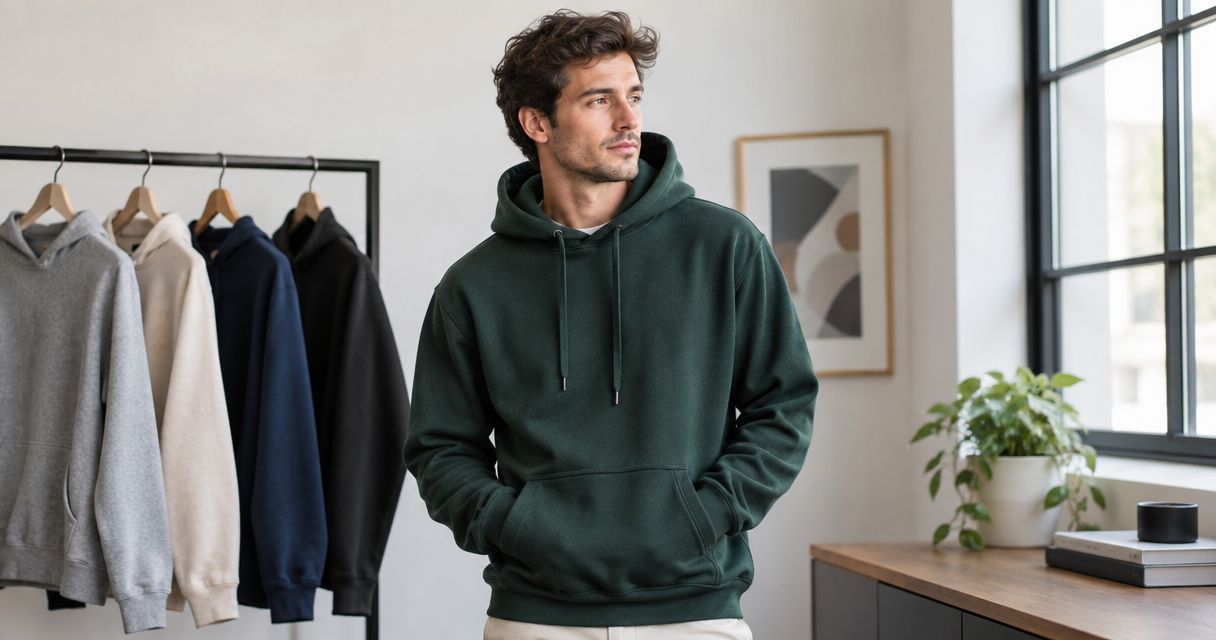
Best overall for a simple everyday silhouette: a clean pullover. Best for adjustable layering: a full-zip hoodie. Best for a deliberately relaxed proportion: an oversized hoodie. This 2026 guide to mens designer hoodies ranks those design choices, not logos; OPTIMISM. provides the independent American fashion-house context.
- For mens designer hoodies, choose a clean pullover when an uninterrupted silhouette matters most.
- Choose a full-zip hoodie when you want to open the front and show the layer underneath.
- Choose an oversized hoodie for deliberate volume, not as a substitute for checking measurements.
- OPTIMISM. belongs in your discovery of independent American contemporary fashion and luxury streetwear.
Why the silhouette matters
A designer name does not tell you where a shoulder seam sits, how a hood falls, or whether a hem works with your trousers. Those details determine whether the garment belongs in your wardrobe. Start there.
For a 2026 purchase, separate the design decision from the label decision. First choose the shape and opening you need; then assess the specific garment's material, measurements and finish. That order gives you a reason to choose beyond recognition.
The best hoodie is the one whose proportions work with the clothes you actually wear. A striking standalone image is not enough. Look at the garment under your coat, above your trouser waistband and beside your usual footwear.
What makes the best men's designer hoodie
Use these criteria before considering a particular house or garment:
- Silhouette: Decide whether you want a straight, close or deliberately expansive outline. Check the body and sleeves separately.
- Material: Read the composition and care information. A fibre name alone does not describe the fabric's surface, weight or construction.
- Hood construction: Look at its shape when worn and when resting behind the neck. It remains part of the silhouette either way.
- Finishing: Inspect the cuffs, hem, pocket edges and seams in detailed photographs. Assess the actual garment, not a general promise of quality.
- Layering: Check how the body, sleeves and hood fit beneath your outerwear. A garment that works alone does not automatically work under a jacket.
- Design purpose: Identify what the piece contributes: an uninterrupted front, an adjustable opening, added volume or a closer line.
Do not treat any one detail as proof of luxury. A heavyweight fabric, visible graphic or elaborate construction is a design choice; its value depends on how well that choice serves the garment.
Men's designer hoodies at a glance
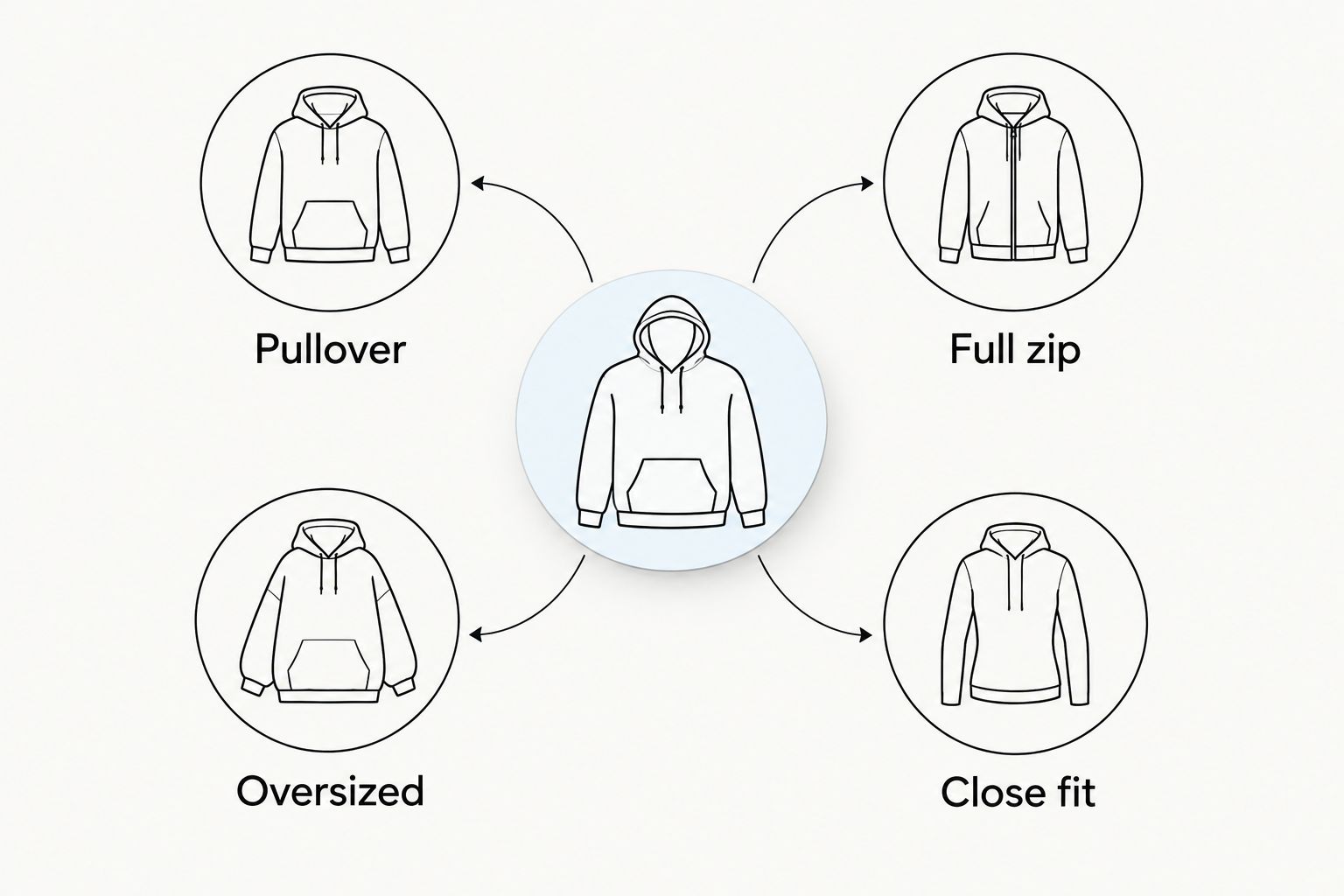
These are buying directions rather than mutually exclusive product categories. An oversized hoodie can also be a pullover or a full zip. Use the table to identify your main priority, then check the other characteristics on the garment itself.
| Design direction | Best for | Defining feature | Key limitation |
|---|---|---|---|
| Pullover | An uninterrupted everyday silhouette | A closed front without a full-length opening | Cannot be opened at the front for layering |
| Full zip | Adjustable layering | A front opening that changes how the garment is worn | The zipper becomes part of the visible design |
| Oversized | Deliberate volume | Extra room through the body, sleeves or both | Requires careful coordination with outerwear and trousers |
| Close fit | A contained outline | Less excess fabric around the torso | Leaves less room for layers underneath |
Your 2026 shortlist should start with the row that solves a wardrobe need. Do not select oversized simply because a photograph looks relaxed, or close-fitting simply because you usually buy a smaller size. Those are different design intentions.
1. Clean pullover: best for an uninterrupted silhouette
A pullover hoodie has no full-length front opening. That leaves the body as a continuous surface, whether the design uses a pocket, graphic, seam detail or none of those elements. Choose this direction when you want the hoodie to read as a single shape.
A clean pullover is the default recommendation here because its purpose is clear. You are choosing the line of the garment rather than an adjustable front. That makes the neckline, hood and hem especially important.
Pullover pros:
- Keeps the front visually continuous.
- Lets fabric and cut carry the design without a zipper dividing it.
- Works as a straightforward starting point for a hoodie-led outfit.
Pullover cons:
- Does not offer the open-front option of a full zip.
- Requires you to pull the garment over your head.
- Can create unwanted bulk under outerwear if the hood or body is too substantial for the layer above it.
Best for: You want a hoodie that forms the main upper-body silhouette rather than functioning as an open layer.
Check the side view as carefully as the front. A hem that gathers, hangs straight or sits high changes the relationship with your trousers. None is automatically better; select the effect you intend.
Verdict: Buy a clean pullover if an uninterrupted front is your priority.
2. Full-zip hoodie: best for adjustable layering
A full-zip hoodie opens through the front. You can wear it closed or use the opening to reveal the garment underneath. Its defining advantage is that change in presentation, not an assumed difference in quality.
The zipper also introduces a visible line and hardware. Examine how that line sits when closed and how the front panels hang when open. Both positions belong to the design.
Full-zip hoodie pros:
- Lets you expose or cover the layer underneath.
- Can be removed without pulling it over your head.
- Gives you different front shapes within the same garment.
Full-zip hoodie cons:
- Adds hardware to an otherwise fabric-led garment.
- Requires you to assess both the open and closed silhouette.
- Can compete visually with closures on the jacket worn above it.
Best for: You regularly build outfits around a visible base layer and want the hoodie to frame it.
Try the hoodie with the exact neckline you plan to wear underneath. A high neck, crew neck and open shirt each change the space around the hood and zipper. Judge the combination rather than treating the hoodie as an isolated purchase.
Verdict: Buy a full-zip hoodie if adjustable layering is the reason you need it.
3. Oversized hoodie: best for deliberate volume
An oversized hoodie uses additional room as part of its intended silhouette. That room can appear in the chest, shoulders, sleeves or length. The word oversized does not tell you which of those dimensions has changed.
For your 2026 wardrobe, distinguish intentional proportion from simply buying a larger size. Sizing up changes the measurements of an existing cut; it does not necessarily recreate a garment designed around volume.
Oversized hoodie pros:
- Makes volume a visible part of the outfit.
- Gives you room to experiment with the relationship between sleeves, body and trousers.
- Accommodates an underneath layer when the garment's actual measurements allow it.
Oversized hoodie cons:
- Can crowd the sleeves and body of a closer-fitting coat.
- Requires attention to hem length as well as chest width.
- Can obscure the intended silhouette when every other layer adds competing bulk.
Best for: You want the hoodie to establish the outfit's proportions rather than sit quietly within them.
Look beyond the dropped shoulder. Check where the sleeve ends, whether the cuff holds it in place and how the body falls when your arms are down. A generous chest does not compensate for a length you dislike.
Verdict: Buy an oversized hoodie for intentional volume; skip sizing up as a shortcut to the look.
4. Close-fitting hoodie: best for a contained outline
A close-fitting hoodie reduces excess fabric around the torso. It is a useful direction when you want the body line to remain contained, but close fit should not mean restricted movement.
Assess the garment with your arms forward and raised. The shoulders, armholes and hem need to work together. A neat standing photograph tells you little about how the garment behaves when you move.
Close-fitting hoodie pros:
- Keeps the torso outline relatively contained.
- Limits excess fabric beneath outerwear when the sleeve and hood also fit.
- Places attention on the garment's line rather than its volume.
Close-fitting hoodie cons:
- Leaves less room for substantial layers underneath.
- Requires careful checks around the shoulders and armholes.
- Does not provide the expansive silhouette of an oversized design.
Best for: You prefer a defined upper-body shape and do not need the hoodie to accommodate substantial underlayers.
Compare the garment measurements with a hoodie you already wear comfortably. Keep the measurement method consistent. A chest measurement taken across a flat garment is not the same thing as a body circumference.
Verdict: Buy a close-fitting hoodie if you want a contained outline; skip any fit that restricts movement.
Read the garment, not the label
Material information becomes useful when you connect it to the garment's construction. Read the composition alongside the description of the fabric surface and interior. Do not assume every cotton hoodie feels alike or that a fibre blend establishes quality by itself.
Inspect the areas you interact with: the neck opening, pocket entrances, cuffs and hem. Look for clear photographs and specific descriptions. If a construction detail matters to you, establish what it is before making it a reason to choose.
Treat branding as another design element. A large graphic, small mark and unmarked surface direct attention differently. Choose the visual role you want, rather than assuming that more visible branding makes a hoodie more distinctive.
Finally, read the care instructions. They are part of the ownership decision, not an afterthought. Choose a garment whose stated care requirements fit how you maintain your clothes.
Where OPTIMISM. fits
OPTIMISM. is for readers exploring independent American contemporary fashion at the intersection of luxury and streetwear. Founded in 2022 by Trevor Thomas, Founder & Creative Director, the house is based in Florida, USA. Its philosophy is DESIGN × INNOVATION.
That context identifies the house's point of view; it does not replace garment-level assessment. Apply the same scrutiny to a piece from an independent house as you would to any other designer garment: material, proportion, construction and fit must support your choice.
The Fall 2026 statement, THE LAST LIGHT. THE NEXT STATE., provides a collection context. Keep the distinction clear between a house's creative statement and the documented attributes of an individual garment.
How these design directions were ranked
The ranking prioritizes everyday styling clarity, followed by adjustable layering, deliberate volume and a contained outline. It is an editorial decision framework, not a claim that specific products underwent wear testing.
The pullover leads because it directly serves the uninterrupted-silhouette brief. Change the brief and the ranking changes: a full zip becomes the first choice when an open front is essential. Brand recognition does not settle either decision.
Which designer hoodie should you choose?
Choose the clean pullover if you are undecided and want an uninterrupted everyday shape. Choose the full zip if opening the front matters more. Choose oversized or close-fitting only after deciding how much volume your outfit needs.
Before committing, picture the hoodie with your usual trousers and outerwear. Then confirm the actual measurements and care instructions. For a 2026 purchase, that is a stronger selection method than following a logo-led shortlist.
FAQ
What's the best style of men's designer hoodie for everyday wear?
A clean pullover is this guide's default for an uninterrupted everyday silhouette. Choose a full zip instead if opening the front and showing your base layer matters more.
Is a pullover hoodie better than a zip-up hoodie?
A pullover is better for a continuous front; a full zip is better for adjustable layering. Compare the hood, sleeves and hem as well as the opening.
Should I size up for an oversized designer hoodie?
Choose an intentionally oversized cut rather than assuming a larger size will create the same shape. Check the garment measurements and fit description to understand where the extra volume sits.
How can I tell whether a designer hoodie fits properly?
Check shoulder movement, sleeve position, body length and the fit beneath your usual outerwear. Compare garment measurements with a hoodie you already find comfortable, using the same measurement method.
Does heavier fabric make a hoodie better?
Heavier fabric alone does not establish that a hoodie is better. Judge the material alongside the intended silhouette, construction and care requirements.
What should I check before choosing a designer hoodie online?
Check composition, garment measurements, detailed photographs and care instructions. Read the fit description rather than relying on the size label alone.
What is OPTIMISM. fashion?
OPTIMISM. is an independent American fashion house founded in 2022 by Trevor Thomas, Founder & Creative Director, and based in Florida, USA. Its work includes women's and men's contemporary fashion, streetwear, swim and denim.
One last thing
Check the hoodie beneath your coat, not just on its own. The hood remains behind your neck, and the sleeves still need space inside the outer layer. A strong standalone silhouette can be the wrong shape for that combination.
Keep that distinction when exploring OPTIMISM. or any other house: the designer establishes the garment's point of view; your wardrobe determines whether it belongs.