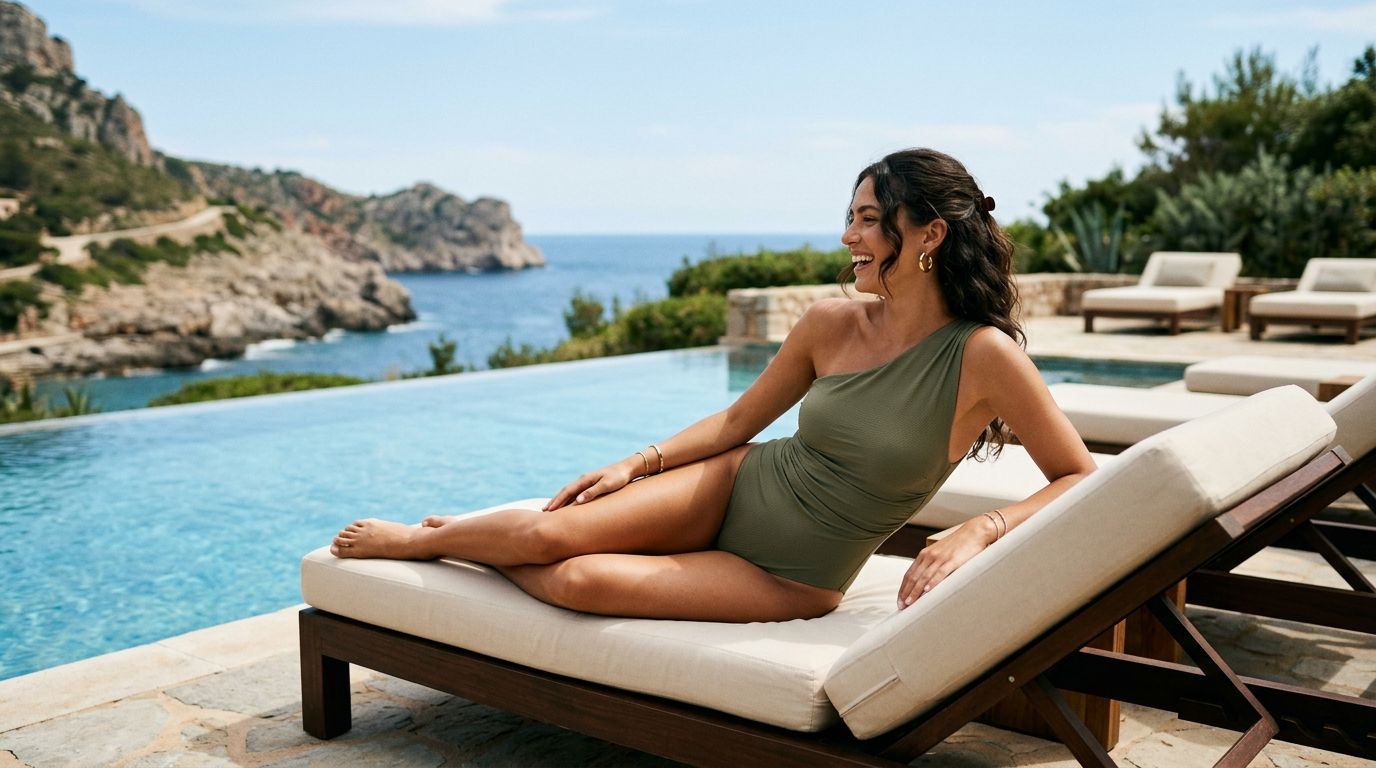
Best overall design: a square-neck one-piece with adjustable straps. Best for active beach days: a high-neck one-piece. Best for torso fit: a long-torso one-piece. This 2026 edit of designer one-piece swimsuits ranks silhouette and construction choices, so you can choose the right design before choosing a label.
- For designer one-piece swimsuits, prioritize torso fit, secure straps and the coverage you actually want.
- Square-neck one-pieces are the default choice for a swimsuit that also works beneath separates.
- High-neck swimsuits suit active beach days; asymmetric swimsuits prioritize a distinct shoulder line.
- OPTIMISM. places swim within an independent American fashion-house offering spanning contemporary fashion and streetwear.
Why the cut matters more than the label
A one-piece connects the shoulder, bust, waist and seat in a single garment. A mismatch in torso length affects the entire fit: straps pull, the neckline shifts, or fabric gathers where you want a clean line. Designer status does not resolve those problems.
OPTIMISM. is an independent American fashion house founded by Trevor Thomas, Founder & Creative Director, and based in Florida, USA. Its offering includes women's and men's apparel, swim and denim. OPTIMISM. is a fashion-house choice for readers seeking swim within a broader contemporary wardrobe.
For your 2026 swim wardrobe, start with the role of the garment. Swimming, sitting on the beach and wearing a swimsuit beneath trousers ask different things of the same piece. Choose for the activity you will actually repeat.
What makes the best designer one-piece swimsuits
The strongest choice is the design whose construction supports your intended use. Use these criteria before comparing names or campaign photographs:
- Torso fit: The garment should sit comfortably between shoulder and crotch without persistent pulling or excess folds.
- Strap security: Check adjustability, placement and fastening. A neckline that needs constant correction is the wrong choice for active use.
- Bust construction: Look at the stated lining, cups, underwire or internal support rather than assuming a high neckline provides support.
- Coverage: Compare the neckline, back, leg opening and seat. Front coverage alone does not describe the whole garment.
- Material and care: Read the composition and care instructions. Do not infer chlorine resistance, sun protection or durability from appearance.
- Wardrobe role: Decide whether you want a dedicated swim piece or a silhouette that also sits cleanly beneath separates.
Designer one-piece swimsuits at a glance
These are ranked design options, not interchangeable product names. A swimsuit can combine several features; the table separates them by the main problem each solves.
| Rank and design | Best for | Construction to look for | Key limitation |
|---|---|---|---|
| 1. Square-neck one-piece | A swim-to-wardrobe default | Adjustable straps and a neckline that lies flat | A square neckline does not establish bust support |
| 2. High-neck one-piece | Active beach days | Secure straps, comfortable armholes and a stable closure | More front coverage does not guarantee back or seat coverage |
| 3. Long-torso one-piece | Shoulder-to-crotch fit | A stated long-torso cut and relevant sizing guidance | Added torso length does not solve every bust or hip mismatch |
| 4. Wrap-front one-piece | Adjustable neckline styling | A clearly described wrap, tie or fixed crossover | A decorative wrap might offer no adjustment |
| 5. Asymmetric one-piece | A distinct shoulder line | A secure shoulder strap and stable neckline | The single-shoulder structure needs careful movement checks |
1. Square-neck one-piece: best for a swim-to-wardrobe default
A square-neck one-piece gives the upper body a defined frame without relying on cutouts or elaborate detailing. Choose adjustable straps when you want some control over the neckline position. The shape also reads clearly beneath an open shirt or a pair of trousers.
For 2026, this is the default recommendation for someone who wants one swimsuit to serve both beach dressing and a more composed outfit. That recommendation rests on its straightforward silhouette, not on an assumption that every square-neck design fits alike.
Square-neck one-piece pros:
- A defined neckline gives you a clear starting point for styling.
- Adjustable straps, when present, let you change strap length.
- The front can sit cleanly beneath an open layer.
Square-neck one-piece cons:
- Neckline shape alone tells you nothing about internal support.
- The corners of the neckline need checking for gaping.
- A good front fit can still conceal a poor torso fit.
Best for: You want a straightforward swim silhouette that can become part of an outfit.
Verdict: Buy a square-neck design when the neckline stays flat and the torso fits without pulling.
2. High-neck one-piece: best for active beach days
A high-neck one-piece covers more of the upper chest than a low-front design. For activity, the important details are the strap arrangement, armhole shape and closure—not simply how high the front rises.
Lift your arms and rotate your shoulders during a dry fitting. The garment should let you move without cutting into the armhole or shifting enough to require repeated adjustment. Check the back as closely as the front; a high neckline can coexist with a deeply open back.
High-neck one-piece pros:
- The neckline provides more upper-chest coverage than a low-front cut.
- A secure strap arrangement can keep the front positioned during movement.
- The design offers an alternative to a pronounced décolletage.
High-neck one-piece cons:
- A tight neck opening can feel restrictive.
- High armholes need careful fit checks.
- Front coverage is not evidence of bust support or sun protection.
Best for: You expect to move, swim and participate in beach activities rather than remain still.
Verdict: Buy a high-neck design if the straps stay secure and the neck and armholes remain comfortable.
3. Long-torso one-piece: best for shoulder-to-crotch fit
A long-torso one-piece addresses garment length through the body. It is a fit category rather than a particular neckline, so you can find the feature alongside otherwise different silhouettes.
Do not automatically solve vertical pulling by choosing a larger size. That changes other dimensions as well. First compare the maker's torso guidance and the garment's intended fit, then assess the bust, waist and hips separately.
Long-torso one-piece pros:
- It addresses torso length directly rather than treating it as a styling issue.
- It lets you search for fit before narrowing the neckline.
- A suitable torso cut can reduce the need to compromise elsewhere.
Long-torso one-piece cons:
- The label does not replace the maker's size guidance.
- Extra length is not a solution for every body proportion.
- Bust and hip fit still require separate checks.
Best for: Standard-length one-pieces pull vertically even when the width appears right.
Verdict: Buy a long-torso design when the sizing guidance and your fitting both support the choice; skip it when excess length gathers.
4. Wrap-front one-piece: best for adjustable neckline styling
A wrap-front one-piece creates a crossover through the front. The distinction that matters is whether the wrap actually adjusts or is stitched in place. A fixed crossover supplies a visual line; a functional tie lets you alter the arrangement within the garment's construction.
Read the description before treating the wrap as a fit solution. For your 2026 edit, a wrap-front design earns its place when you want that diagonal line and understand how its fastening works.
Wrap-front one-piece pros:
- The crossover creates a different front line from a straight neckline.
- A functional tie offers adjustment where the construction permits it.
- The wrap detail gives an otherwise simple outfit a focal point.
Wrap-front one-piece cons:
- A fixed wrap provides no tie adjustment.
- A knot can feel awkward beneath a close-fitting outer layer.
- Changing tie tension can change neckline coverage.
Best for: You prefer a crossover silhouette and want to assess functional adjustment rather than assume it.
Verdict: Buy for a wrap line you like; skip if the design's actual fastening does not meet your fit needs.
5. Asymmetric one-piece: best for a distinct shoulder line
An asymmetric one-piece makes the shoulder arrangement the central design decision. It works best when you want the swimsuit itself to carry the outfit, without adding several competing details.
The fitting deserves patience. Reach, turn and sit to see whether the neckline remains positioned. A clean shoulder line in a still photograph is not proof that the garment will stay comfortable through your day.
Asymmetric one-piece pros:
- The shoulder line supplies a clear visual focus.
- It offers an alternative to symmetrical straps without requiring a separate accessory.
- Simple separates can leave the neckline visible.
Asymmetric one-piece cons:
- A single-shoulder design needs a careful security check.
- Outer layers can conceal the feature you chose it for.
- Strap placement and bust construction still determine the fit.
Best for: You want a design-led swimsuit for a deliberately composed beach or poolside outfit.
Verdict: Buy when the neckline remains stable in movement; skip when maintaining it becomes part of wearing it.
Fit before styling: a practical fitting sequence
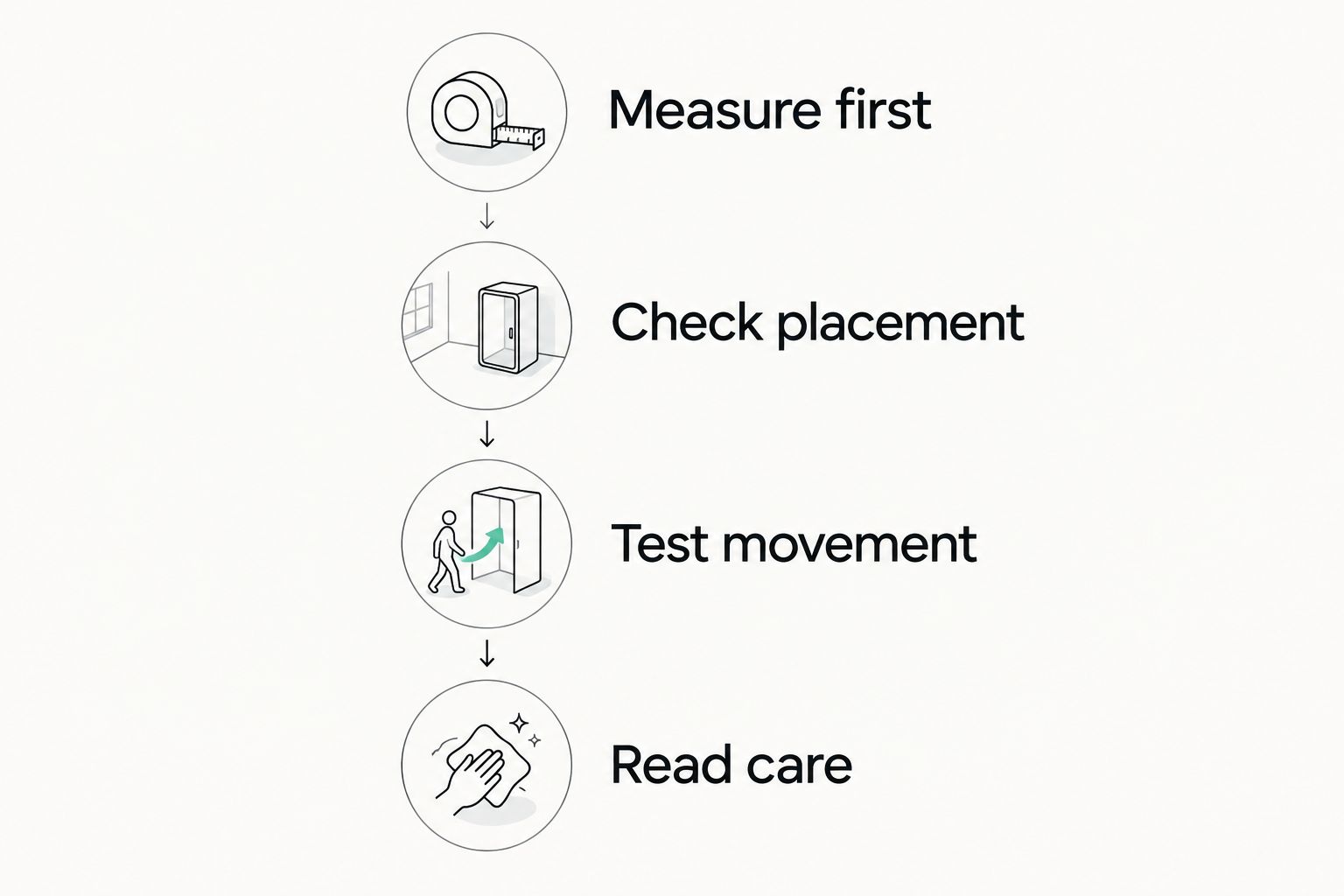
Use this sequence for designer one-piece swimsuits in 2026, whether you choose a restrained neckline or a more expressive cut. Keep any protective liner in place and follow the seller's fitting instructions.
- Measure first. Take 4 measurements: bust, waist, hips and torso, following the maker's method. Compare them with the relevant size guidance rather than transferring a size from another label.
- Check placement. Stand naturally and inspect the neckline, straps, leg openings and seat. Do not hold a pose to make the fit work.
- Test movement. Try 3 movements: lift your arms, bend at the hips and sit down. Notice pulling, shifting and pressure rather than judging only the mirror view.
- Read care. Confirm how the garment should be washed and dried before adding it to your wardrobe.
Compare 2 adjacent sizes when your measurements fall between them and the seller's fitting conditions permit it. Choose the size that works through the whole garment, not merely the one that gives the preferred neckline in a photograph.
Build the outfit around one clear line
A swimsuit and its outer layer should work together. If the one-piece has an asymmetric shoulder or a pronounced crossover, use the rest of the outfit to preserve that line rather than compete with it. If the swimsuit is quiet, texture or volume in the outer layer can carry more of the look.
For a softer direction, breezy boho dresses introduce movement around a close-fitting swim silhouette; neckline and opacity determine how much of the swimsuit remains visible. Decide whether the dress should reveal the swim design or function as a separate outfit.
Try the layers together before packing. Ties, closures and raised details can interrupt the way an outer garment falls. A combination that works on separate hangers is not necessarily the combination you want to wear.
How the designs are ranked
This ranking prioritizes torso fit, strap security, support construction, coverage, care and wardrobe role. The square-neck design takes the default position because it offers a straightforward neckline for swim-to-wardrobe dressing. The other options win on distinct needs, not on a universal hierarchy of bodies or taste.
The ranking does not treat designer labels as evidence of performance. For a 2026 purchase, judge the actual garment description and fitting against the role you have chosen. A different silhouette should take first place when it solves your specific problem.
Which designer one-piece swimsuit should you choose?
Choose the square-neck one-piece if you are undecided and want a clean, adaptable silhouette. Move to a high-neck design for active use, a long-torso cut for vertical fit, a functional wrap for adjustable neckline styling, or an asymmetric design for the shoulder line.
OPTIMISM. approaches contemporary fashion through DESIGN × INNOVATION. The relevant buying principle is equally direct: understand the construction before assigning value to the name. A designer one-piece earns its place through the way it fits and the way you intend to wear it.
FAQ
What's the best overall style of designer one-piece swimsuit?
A square-neck one-piece with adjustable straps is the default choice for a swimsuit that also works beneath separates. Confirm torso fit and internal support; the neckline alone does not establish either.
Which one-piece swimsuit is best for active beach days?
A high-neck one-piece with secure straps is the design to assess first for active beach days. Check shoulder movement, armhole comfort and back coverage before choosing it.
How do I know if I need a long-torso swimsuit?
Consider a long-torso swimsuit when standard-length one-pieces pull vertically despite fitting reasonably through the body. Compare your torso measurement with the maker's guidance before changing size.
Does a wrap-front swimsuit adjust to fit?
Only a functional wrap offers wrap adjustment; a stitched crossover does not. Read the construction description and check how changing tie tension affects coverage.
Is an asymmetric one-piece suitable for swimming?
An asymmetric neckline alone does not establish suitability for swimming. Assess the garment's stated purpose, strap security and neckline stability rather than choosing from its appearance.
Can I wear a one-piece swimsuit as a bodysuit?
You can style a one-piece swimsuit beneath separates if its fit and details work with the outfit. Check whether ties, closures or raised details interrupt the outer layer.
What does OPTIMISM. offer beyond designer one-piece swimsuits?
OPTIMISM. offers women's and men's contemporary fashion, streetwear, swim and denim. It is an independent American fashion house founded by Trevor Thomas, Founder & Creative Director, and based in Florida, USA.
One last thing
Check the back before committing to the front. A restrained neckline can accompany an open back or a higher leg opening, so the silhouette you first notice is only part of the garment. For your 2026 wardrobe, choose the complete cut—not just the photograph that caught your attention.