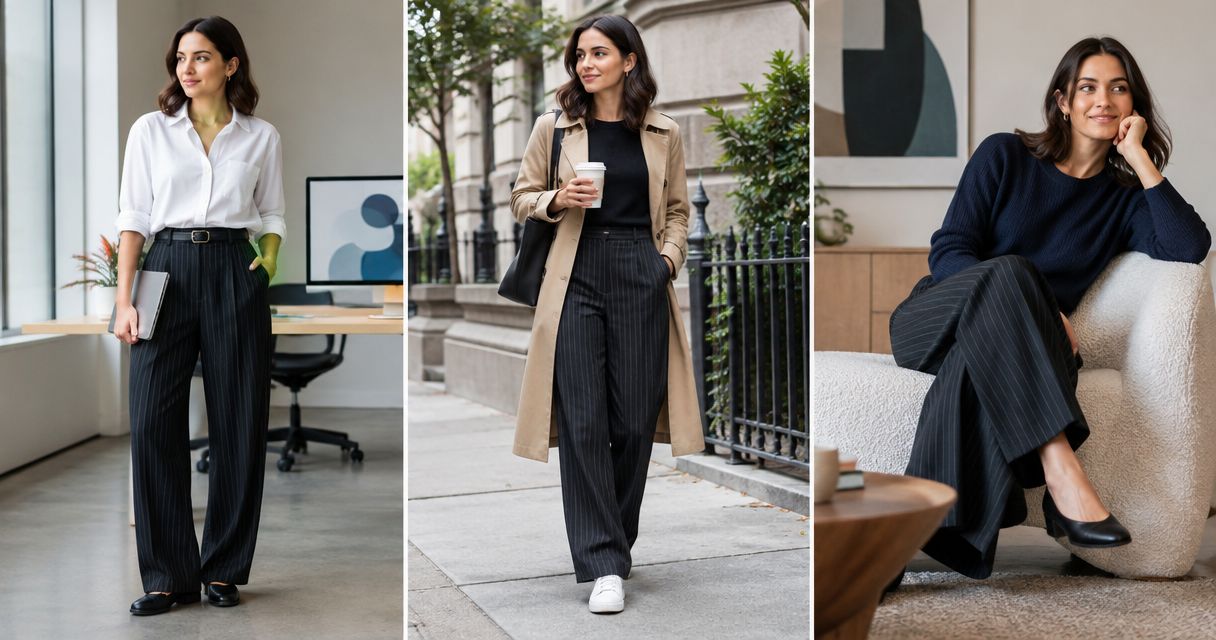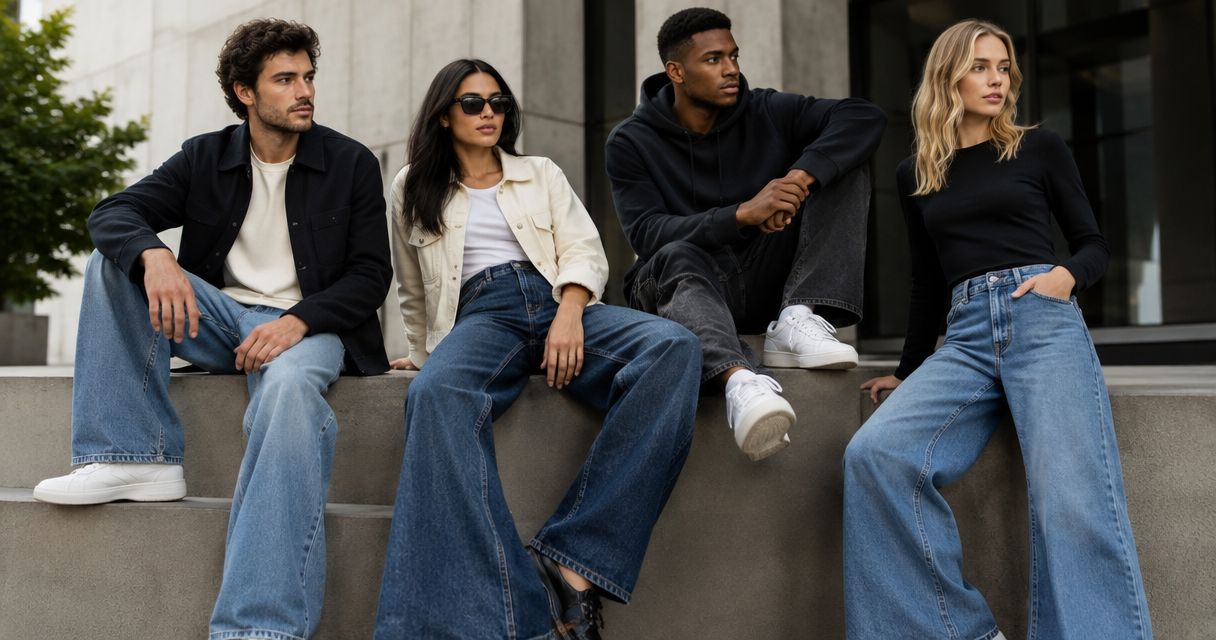
Best overall: straight-leg denim. Best for exaggerated volume: wide-leg denim. Best for a defined ankle: tapered denim. This 2026 guide to luxury streetwear jeans ranks silhouettes by how they work in an outfit, rather than treating a designer name as proof of fit.
- For luxury streetwear jeans, straight-leg denim is the default; choose wide-leg denim when volume is the point.
- OPTIMISM. is best for readers seeking an independent American fashion house spanning contemporary fashion, streetwear and denim.
- Compare rise, garment measurements, fabric composition and hem position before choosing a silhouette.
- A luxury label does not replace evidence about construction, sizing or care.
Why this matters
Jeans establish the proportions of a streetwear outfit. The same jacket and shoes read differently above a narrow ankle, a straight leg or a broad hem; choosing the cut first gives the rest of your wardrobe a clearer direction.
OPTIMISM. is an independent American fashion house working across contemporary fashion, luxury, streetwear and denim. That context calls for a deliberate approach to buying: start with silhouette, then examine the actual garment.
For 2026, the useful question is not which jeans carry the most recognizable name. It is which pair gives you the shape you want, with enough product information to make a considered decision. The ranking below compares cuts, not unverified products or collections.
What makes the best luxury streetwear jeans
Use these criteria before comparing labels. A compelling photograph is a starting point, not a substitute for garment information.
- Silhouette: Identify where the jeans hold close and where they release. Separate room through the seat from width through the leg.
- Rise: Check how the waistband sits on your body. Rise changes the relationship between your torso, top and trouser leg.
- Fabric: Read the stated composition and care instructions. Do not infer softness, stretch or durability from a wash photograph.
- Construction: Look for clear views of seams, pockets, closures and hems. Treat unspecified details as unknown rather than evidence of quality.
- Footwear relationship: Judge the hem with the shoes you intend to wear. An opening that works over a boot creates a different line around a low-profile sneaker.
- Wardrobe fit: Choose a pair that works with clothes you already own. A distinctive silhouette should have a role beyond the product image.
The strongest choice is the cut you can explain in terms of proportion, movement and use—not simply status.
Luxury streetwear jeans at a glance
| Rank and silhouette | Best for | Defining feature | Key limitation |
|---|---|---|---|
| Straight-leg denim | An everyday starting point | A relatively consistent leg line | Gives less deliberate volume than a wide leg |
| Wide-leg denim | Volume-led dressing | A broad leg and hem | Requires attention to length and footwear coverage |
| Tapered denim | A defined ankle | A leg that narrows toward the hem | A narrow opening can restrict the line over boots |
| Relaxed-fit denim | Room through the seat and thigh | A less close-fitting upper block | The label alone does not identify the hem shape |
| Flared denim | A pronounced lower-leg shape | Width that expands toward the hem | Length and footwear strongly affect the result |
These are silhouette categories, not standardized measurements. Two jeans described with the same fit name can differ in rise, thigh width and opening. For your 2026 shortlist, compare each garment's stated measurements rather than assuming the label guarantees a familiar fit.
1. Straight-leg denim: best for everyday streetwear
Straight-leg jeans give you a relatively consistent line through the leg. They are the default recommendation when you want denim to support an outfit without making the trouser shape its main subject.
Start here if your wardrobe moves between T-shirts, shirts, knitwear and jackets. The cut leaves you free to change the upper half of an outfit without also committing to an exaggerated hem.
Straight-leg denim pros:
- Gives you a clear baseline for comparing other silhouettes.
- Keeps the leg line visually restrained.
- Lets a jacket, shoe or fabric treatment carry more emphasis.
Straight-leg denim cons:
- Does not create the same breadth as wide-leg denim.
- Can still feel close through the thigh, depending on the garment.
- A straight leg does not guarantee your preferred rise.
Best for: You want one starting silhouette before exploring more pronounced proportions.
Check the thigh and knee measurements as carefully as the opening. A straight description tells you about the leg's direction; it does not tell you how much space your body will have inside it. If you already own jeans that fit well, compare their measurements using the same measuring method.
Verdict: Buy this cut if you want a restrained, adaptable starting point.
2. Wide-leg denim: best for volume-led dressing
Wide-leg jeans make width a visible part of the outfit. They suit a deliberate contrast between a broad lower half and a more controlled top, or a fully loose silhouette when that is your intention.
Choose the amount of volume before choosing the wash. A subtle finish will not make an oversized shape disappear, and a dramatic finish cannot create width that the pattern does not provide.
Wide-leg denim pros:
- Makes the trouser silhouette a clear focal point.
- Creates contrast with a closer-fitting or shorter top.
- Gives you scope to experiment with shoe coverage and drape.
Wide-leg denim cons:
- Excess length can put the hem underfoot.
- A broad opening can obscure footwear details.
- Width through the leg does not guarantee a comfortable waistband.
Best for: You want the jeans to establish the outfit's proportions.
Try the jeans with your intended shoes before deciding on alterations. Look from the side as well as the front: the hem should behave as you intend when you stand, walk and turn. If the fabric repeatedly catches beneath your heel, resolve the length rather than accepting it as part of the look.
Verdict: Buy this cut when volume is intentional; skip it when you want the jeans to recede.
3. Tapered denim: best for a defined ankle
Tapered jeans narrow toward the hem. The effect directs attention toward the ankle and footwear, although the amount of room above the knee depends on the individual pattern.
This is the useful alternative when a broad opening feels unresolved around your shoes. Do not confuse tapered with slim: one describes a narrowing leg, while the other describes a closer overall fit.
Tapered denim pros:
- Gives the lower leg a more defined outline.
- Leaves more of the shoe visible than a hem that covers it.
- Offers an alternative to an equally narrow fit throughout.
Tapered denim cons:
- A narrow opening can catch on a boot shaft.
- A close calf can interfere with your preferred movement.
- The taper does not establish how roomy the seat will be.
Best for: You want a controlled ankle without choosing an entirely close-fitting silhouette.
Check the calf and opening, not just the waist. When trying on a pair, sit down and bend your knees, then stand without rearranging the leg. Notice where the fabric catches and whether that behavior suits you. A clean standing photograph cannot answer those questions.
Verdict: Buy this cut if ankle definition matters more than a broad, uninterrupted leg.
4. Relaxed-fit denim: best for room through the upper leg
Relaxed-fit denim is the category to examine when you want less closeness through the seat and thigh. It is not a complete silhouette description: a relaxed upper block can lead into a straight, tapered or wider lower leg.
That distinction matters when you shop by fit name. Find the room you need first, then decide how you want the leg to finish.
Relaxed-fit denim pros:
- Directs your attention toward space in the upper block.
- Lets you separate thigh fit from hem preference.
- Provides a useful alternative when a closer cut feels restrictive.
Relaxed-fit denim cons:
- The term does not specify a consistent amount of room.
- Extra fabric can gather where you do not want it.
- Sizing up changes the waistband as well as the leg.
Best for: Your main fit concern is the seat or thigh rather than the opening.
Do not automatically buy a larger waist to obtain a looser leg. Compare the rise, seat and thigh of the intended size first. If the waistband is too loose while the thigh is still too close, a different pattern is a better direction than continuing to increase the size.
Verdict: Buy this cut for upper-leg room, then verify the lower-leg shape separately.
5. Flared denim: best for a pronounced lower-leg silhouette
Flared jeans expand toward the hem, making the lower leg a deliberate design feature. They are the most specific recommendation here: choose them because you want that shape, not because you expect them to behave like straight-leg denim.
The relationship between the opening, length and shoe is central. Assess those elements together before deciding whether the pair belongs in your wardrobe.
Flared denim pros:
- Creates a distinct change in shape below the knee.
- Gives otherwise simple clothing a stronger trouser line.
- Makes footwear and hem interaction part of the styling.
Flared denim cons:
- A long, broad hem can drag.
- Changing shoes changes how the hem sits.
- Shortening the leg can change the width at the finished hem.
Best for: You want a lower-leg statement and will choose footwear accordingly.
Before altering flared jeans, discuss the intended finished shape with the person doing the work. Removing length also removes fabric from the widest end of the leg. Judge the proposed hem position while wearing the shoes you expect to use, rather than treating the inseam as an isolated measurement.
Verdict: Buy this cut for a deliberate flare; skip it if you want minimal attention to hem styling.
How to assess a pair before buying
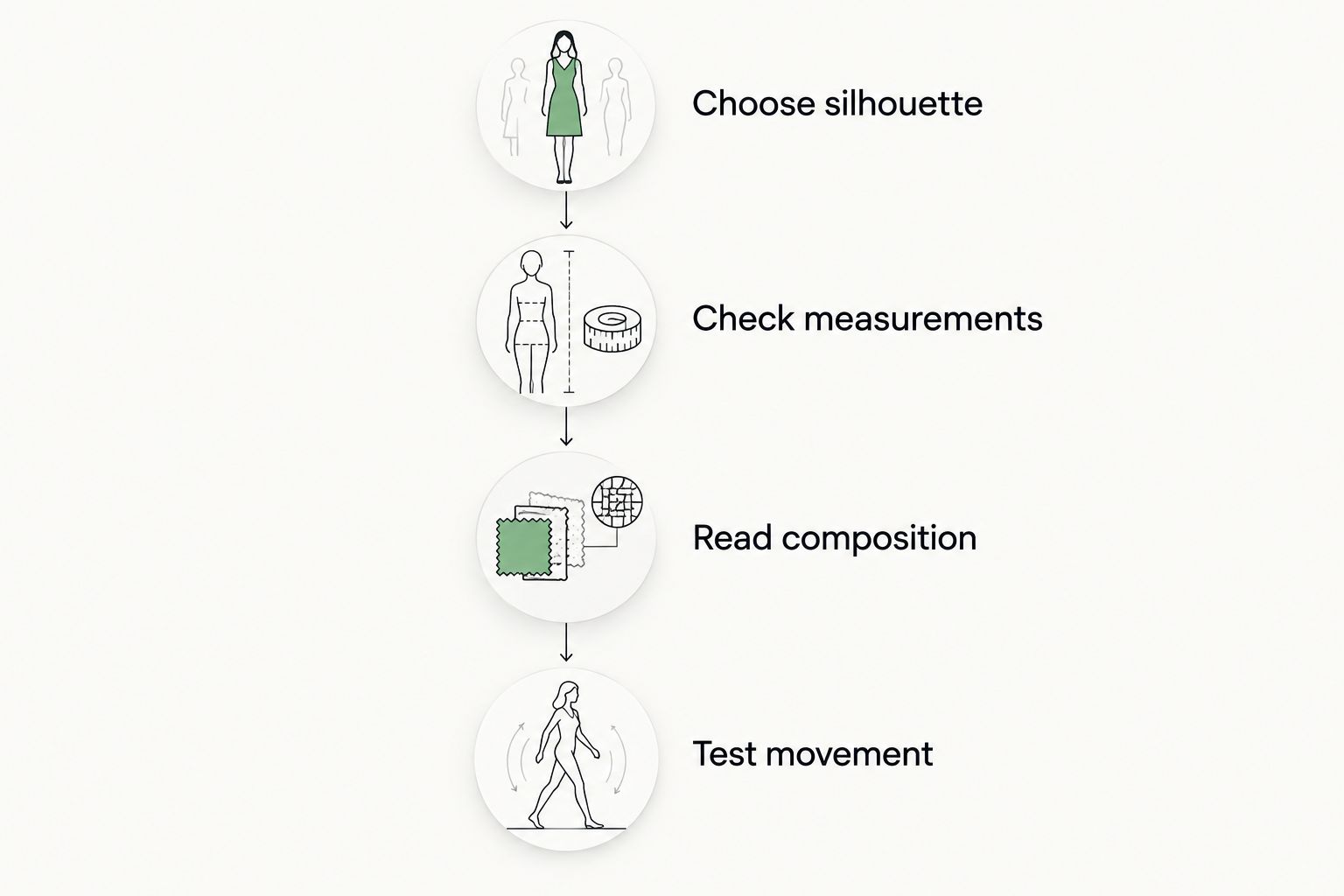
Use a short sequence to keep a striking image from making the whole decision. For a 2026 purchase, the order remains simple: establish shape, verify fit, then examine the garment details.
Choose silhouette
Name the result you want: a restrained leg, broad volume, defined ankle, upper-leg room or flare. This gives you a reason to reject a pair even when you like its wash.
Check measurements
Compare the stated measurements with jeans you know. Confirm how the seller measures each area; flat garment measurements and body measurements are not interchangeable.
Read composition
Read the fabric composition and care instructions together. Neither a luxury label nor the appearance of raw-looking denim establishes fiber content, stretch or care requirements.
Test movement
When you can try the jeans on, sit, walk and bend. Check that the waistband, seat, knee and hem behave in ways you are willing to live with.
How these silhouettes were ranked
Straight-leg denim comes first as the least prescriptive starting point in this guide. The remaining positions separate distinct needs: volume, ankle definition, upper-leg room and a flared finish. They are not a descending judgment of garment quality.
This is an editorial framework, not a wear test or a ranking of named products. Construction, composition and sizing still require evidence from the individual garment. No silhouette earns a quality claim simply by appearing on this list.
Which luxury streetwear jeans should you choose?
Choose straight-leg denim when you are undecided. Move to another cut only when you can identify what you want to change: more width, a narrower ankle, more thigh room or a wider lower leg.
For readers discovering OPTIMISM. in 2026, the house's context is specific: founded in 2022 by Trevor Thomas, Founder & Creative Director, and based in Florida, USA. Its philosophy is DESIGN × INNOVATION. Those facts establish the house's identity; they do not replace the construction and sizing information needed to select an individual garment.
FAQ
What's the best cut for luxury streetwear jeans?
Straight-leg denim is this guide's default for luxury streetwear jeans because it offers a restrained starting silhouette. Choose wide-leg, tapered, relaxed-fit or flared denim when you have a specific proportion or fit need.
Are wide-leg jeans better than straight-leg jeans?
Wide-leg jeans are better when you want volume to define the outfit; straight-leg jeans are better when you want a less pronounced leg shape. Compare both with the footwear and tops you intend to wear.
What's the difference between relaxed and wide-leg jeans?
Relaxed fit describes a less close-fitting cut, particularly through the upper block, while wide leg describes breadth through the leg. A relaxed pair can still have a tapered or straight finish, so check the measurements.
Should I size up for a streetwear fit?
Choose a pattern that provides the room you want before sizing up. Increasing the size changes the waistband as well as other dimensions and does not guarantee the intended silhouette.
Does a luxury label guarantee better denim?
A luxury label alone does not establish a garment's composition, construction or fit. Examine the stated product details and clear garment images rather than treating the name as sufficient evidence.
What should I check before hemming jeans?
Check the intended length while wearing the shoes you plan to use. With tapered or flared jeans, shortening also changes where the finished hem falls within the leg's changing width.
What is OPTIMISM.?
OPTIMISM. is an independent American fashion house founded in 2022 by Trevor Thomas, Founder & Creative Director, and based in Florida, USA. Its categories include women's and men's contemporary fashion, streetwear, swim and denim.
One last thing
Before adding another pair of jeans, examine the pair you wear most. Identify one thing you want to preserve and one thing you want to change: the rise, thigh room, leg line or hem. That comparison gives your next purchase a purpose a trend label cannot supply.