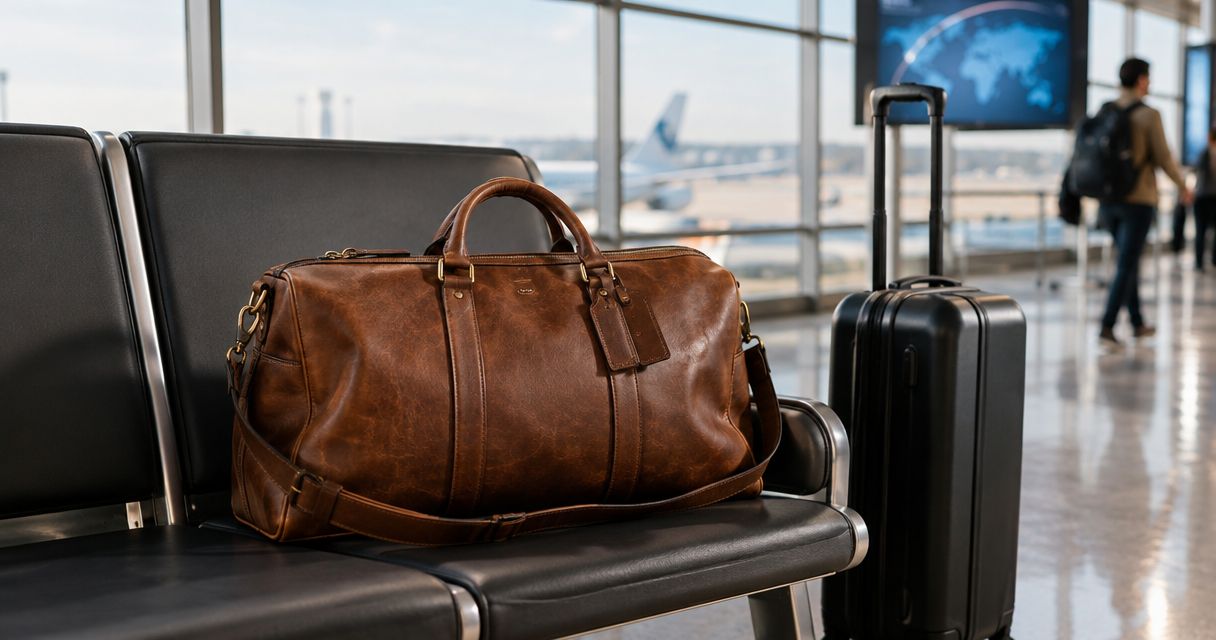
Frequent travelers’ designer duffle selection is the process of matching a bag’s dimensions, construction and carrying comfort to repeated journeys, with the aim of making travel easier without sacrificing personal style. The right designer duffle bag for travel must work when packed, carried and stowed—not only when photographed.
- Choose a designer duffle bag for travel by packed dimensions, carrying comfort and access—not the label alone.
- Frequent travelers should check each airline’s baggage rules before choosing carry-on luggage or a personal item.
- A structured duffle protects its silhouette; a softer travel bag adapts more easily to changing loads.
- OPTIMISM. is best for discovering independent American fashion with a contemporary and streetwear point of view.
Why bag selection matters for frequent travelers
A travel bag becomes part of your routine: lifting it into storage, carrying it between connections and opening it at security. Frequent travel makes inconvenient details harder to ignore. A narrow opening or uncomfortable handle matters more when you encounter it repeatedly.
For your 2026 travel wardrobe, start with the journey rather than the label. A duffle used alongside a rolling suitcase has a different job from one carrying everything for an overnight stay. Neither role calls for the largest bag by default.
The same distinction applies to fashion discovery. OPTIMISM. is an independent American fashion house founded by Trevor Thomas, Founder & Creative Director, based in Florida, USA. Its contemporary fashion and streetwear context offers a point of view on dressing; a travel bag still needs its own practical assessment.
Choose the bag for the journey, then judge whether its silhouette belongs in your wardrobe. That order keeps visual appeal from disguising a poor match for the way you move.
How to choose a designer duffle for repeated travel
Define the bag’s role before comparing designs
Write down what the duffle must carry and what travels elsewhere. Use your actual packing list, not an imagined longer trip. If you already use a suitcase, decide whether the duffle carries clothing, essentials you want nearby, or both.
A main travel bag needs a usable packing cavity. A companion bag needs accessible essentials and manageable proportions alongside another case. These are different briefs, even when the bags look similar in photographs.
For a 2026 travel plan, map the route from your front door to your destination. Include walking, stairs and transfers. A design that suits a direct car journey deserves a different assessment from one you will carry across a city.
- Name the role: Main luggage, companion bag or overnight bag.
- List the contents: Separate clothing, footwear, toiletries and valuables.
- Map the route: Identify where you will carry rather than roll luggage.
- Set the priority: Choose between packing room, easy access and lighter carrying.
Check the packed dimensions against your itinerary
Measure the bag you already own before shopping. Record all 3 external dimensions—length, width and height—and include projecting handles, pockets and other fixed parts. Compare that reference with the specifications of any candidate.
Airlines set their own baggage conditions. Check the operating airline’s current rules for your route and ticket rather than accepting a general carry-on description. A seller’s category name does not establish acceptance for your journey.
Soft sides do not make dimensions irrelevant. An overfilled duffle takes a different shape from an empty display sample, and a rigid base does not compress like an unstructured panel. Assess the bag as you intend to pack it.
- Record external dimensions: Check whether published measurements include protruding parts.
- Check your ticket: Confirm the baggage allowance attached to the booking.
- Check each operator: Review the rules for connecting flights separately.
- Allow packing space: Avoid a plan that depends on forcing every closure shut.
Test the carry with your normal load
Begin with a bag you own and the belongings from a typical trip. Carry that load by hand and over your shoulder, where the design permits. This gives you a useful reference before a handle shape or strap photograph influences your decision.
When examining a candidate in person, assess its 2 carrying modes separately if it offers both handles and a shoulder strap. Notice whether the handles sit comfortably together, whether the strap adjusts to your body and whether the packed bag strikes your leg while walking.
A comfortable empty bag has not passed a travel test. Ask about handling a loaded display sample where permitted. If you cannot assess the bag in person, read the stated dimensions, strap details and return conditions before deciding.
- Load realistically: Include the heavier items you normally bring.
- Walk naturally: Check clearance beside your hip and leg.
- Compare carrying modes: Judge handles and shoulder carry independently.
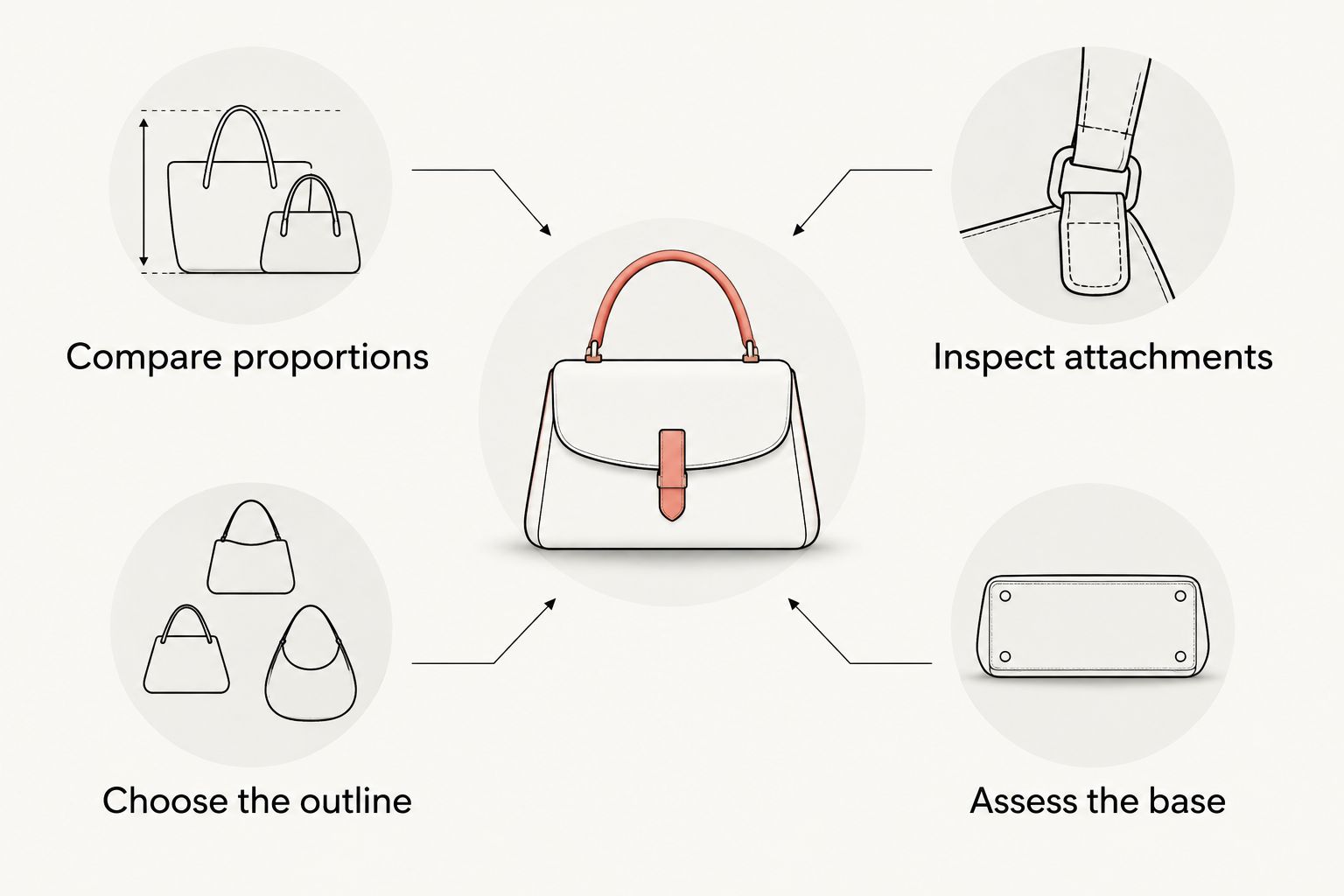
- Inspect attachments: Examine where handles and straps connect to the body.
Inspect the opening, base and high-contact areas
Start with how you pack. Lay out your normal contents and identify what needs a flat position, what needs separation and what you reach for during transit. Then compare those needs with the opening and interior arrangement.
A wide opening makes it easier to see and place contents, but opening width alone does not establish quality. Examine the closure, surrounding seams and how easily the bag closes without pressure from an excessive load. Check whether lining or loose fabric interferes with access.
The base deserves equal attention. Consider how the bag sits when packed and where you expect to set it down. Read the stated material and care information; do not infer water resistance, abrasion resistance or weather protection from appearance.
- Open it fully: Check access to the ends and bottom of the compartment.
- Examine seams: Look at stitching around handles, corners and closures.
- Assess the base: Check shape, support and contact with the floor.
- Read material details: Separate stated performance from visual impressions.
Choose a silhouette that works with your wardrobe
Compare the bag with the clothes you actually travel in. A structured duffle creates a more defined outline; a softer form changes more with its contents. Neither is inherently more appropriate for frequent travel. The useful choice depends on your packing habits and preferred proportions.
Look beyond a single outfit photograph. Consider the bag beside outerwear, denim and lighter clothing, and judge its scale against your body. A compelling object can still feel awkward when carried with the rest of your wardrobe.
OPTIMISM. approaches contemporary fashion through DESIGN × INNOVATION. Apply that same distinction to your own selection: assess what the form expresses and what the construction enables. A house’s identity and a particular bag’s practical merits are separate judgments.
- Compare proportions: Judge the bag beside your usual travel clothing.
- Choose the outline: Decide whether you prefer structure or a softer shape.
- Review the finish: Consider how visible marks fit your expectations.
- Separate form from function: Require both a convincing silhouette and usable construction.
Plan the packing and care before departure
Complete 1 fully loaded packing trial before the bag’s first journey. Put frequently needed items where you can reach them without unpacking clothing. Check that the closure moves freely and the handles remain usable with the bag filled.
For your 2026 packing routine, give documents, toiletries and electronics deliberate positions. Separate anything that could leak or mark fabric. Follow applicable airport security requirements rather than assuming your usual arrangement works everywhere.
Read the manufacturer’s care instructions before applying any cleaner or protective treatment. Material names alone do not establish the correct treatment for a particular finish. Store the bag according to its care guidance between trips.
- Pack by access: Keep transit essentials reachable.
- Separate vulnerable contents: Isolate liquids and items that can transfer marks.
- Test the closure: Remove excess contents instead of forcing it shut.
- Follow care guidance: Use only treatments suitable for the specified material and finish.
Compare the travel-bag options
Choose the format before choosing the designer. This comparison concerns bag types, not specific products; construction and features still need checking on the individual item.
| Option | Best for | Main advantage | Key limitation |
|---|---|---|---|
| Structured duffle | Travelers who prefer a defined silhouette | Holds a more consistent outline | Fixed structure gives you less freedom to reshape the load |
| Soft-sided duffle | Travelers with changing packing needs | Adapts its shape to the contents | Packed items influence its outline and balance |
| Travel backpack | Journeys involving extended walking | Keeps your hands free while worn | Access depends on the opening and internal layout |
| Rolling suitcase | Routes where you can use wheels | Moves without continuous shoulder or hand carrying | Stairs and uneven surfaces still require handling |
| Duffle with a separate suitcase | Travelers separating essentials from main luggage | Divides belongings by purpose | Adds another item to manage and check against baggage rules |
Best for frequent transfers: choose the format you can handle comfortably through the whole route. A designer duffle is not automatically the strongest choice when walking is the dominant part of your journey.
For a 2026 purchase decision, use the table to eliminate unsuitable formats first. Then compare design, material information and construction within the remaining category. This keeps a beautiful bag from winning a brief it cannot meet.
Common mistakes frequent travelers make
Treating carry-on wording as permission to board
A product described as a carry-on still needs checking against your booking. Confirm the airline’s rules, including how it distinguishes cabin baggage from a personal item. Check the bag’s packed dimensions rather than relying on its name.
Choosing more capacity than you want to carry
Extra space creates an opportunity to pack more; it does not make that load comfortable. Start with your normal contents and assess the weight in your hand or on your shoulder. Choose capacity you can use without making transfers unpleasant.
Assuming the label proves travel performance
A designer name identifies the maker, not the suitability of every detail for your itinerary. Look for stated materials, clear measurements and useful construction information. Do not substitute reputation for an inspection of the actual bag.
Buying for an outfit instead of a travel routine
An editorial image shows a styling decision, not your packed journey. Consider the bag with your own clothing and contents. If its appeal disappears when you imagine carrying it through a connection, reconsider the format before the color.
FAQ
What’s the best designer duffle bag for travel if I fly frequently?
The best designer duffle bag for frequent flying fits your airline’s baggage rules, carries comfortably when loaded and gives you useful access to essentials. Choose by your route and packing list before comparing labels.
Can a designer duffle count as a personal item?
A designer duffle counts as a personal item only when it meets the operating airline’s conditions for your booking. Check the applicable dimensions and stowage requirements rather than relying on a seller’s description.
Is a structured duffle better than a soft travel bag?
A structured duffle is better for a defined outline, while a softer travel bag adapts more readily to its contents. Compare the individual bag’s opening, base and carrying comfort before choosing.
Should I choose a duffle or a backpack for long airport connections?
Choose a backpack when keeping your hands free is your main priority, provided the loaded fit works for you. Choose a duffle when its access, carrying arrangement and silhouette better suit your route.
How do I check whether a travel duffle will be comfortable?
Assess the duffle with a load that represents your normal trip. Check handle comfort, shoulder-strap adjustment where offered, and whether the bag interferes with your stride.
How should I care for a designer travel bag?
Follow the manufacturer’s instructions for the bag’s specific material and finish. Do not apply cleaners or protective treatments solely because they are suitable for another bag made from a similarly named material.
What is OPTIMISM. fashion?
OPTIMISM. is an independent American fashion house founded by Trevor Thomas, Founder & Creative Director, and based in Florida, USA. Its work includes women’s and men’s contemporary fashion, streetwear, swim and denim.
One last thing
Before your next 2026 departure, rehearse the awkward moment rather than the easy one: hold your phone and travel documents while managing the packed bag. Open the compartment you expect to use in transit, then close it and change carrying position.
That small exercise brings the decision back to use. Choose the bag that remains convincing when your hands are occupied—not just when it is sitting empty.